Location :Hamedan
Client : Municipality of Hamedan
Total area : 44,500 square meters
Build area : 2000 square meters
Date : 2018
Architecture Firm :Avan Architect
Design Team :Mehdi Khodabandelou,Saeed Amiri,Saeed Asgari
Construction Drawings : Mehdi Khodabandelou,Saeed Amiri
Type : public use
Interior Design : Mehdi Khodabandelou
CG Artist :Saeed Asgari
Material : Soil ,Concrete
Structure Type : Concrete
Photographer : Saeed Asgari
Nowadays in modern cities with the expansion of urban areas, the development of roads, and the increase in traffic, natural elements such as mountains, seas, lakes, and hills have become unsafe. Humans have eliminated these elements to create spaces for themselves, disregarding the natural structure. This disregard for the natural structure has led to urban design without considering the spirit of the place.
The concept of “crisis of place” in contemporary urban planning is one of the most prominent challenges, resulting in the creation of urban spaces lacking
identity, history, and connection. Urban planning in the 20th century has focused more on quantity rather than quality, leading to emotional detachment from the place. The impact of modernity on places has diminished their value.
Understanding the geology of each landscape and incorporating it into our cultural fabric can be helpful in making decisions about future land use. As cities expand and old city landmarks disappear, a crisis of identity arises, emphasizing the importance of landmarks in creating a sense of belonging and attachment in the city.
In cities located in desert, creating prominent features like domes, minarets, and wind catchers is essential for engaging with guests or community
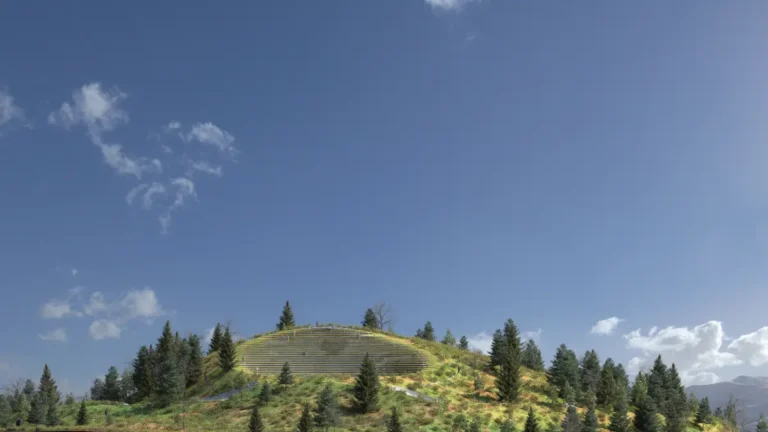
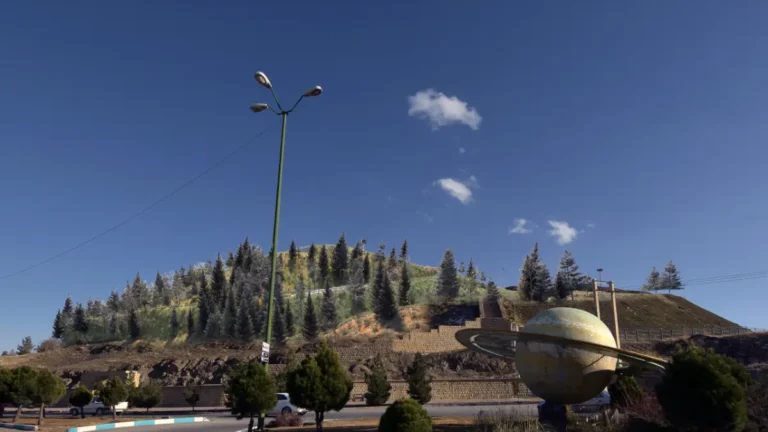
members. However, in mountainous cities like Hamedan, the presence of hills within the city naturally creates distinctive and recognizable points that guide residents through the city. Each hill offers a unique and unparalleled view from the city to the hill.
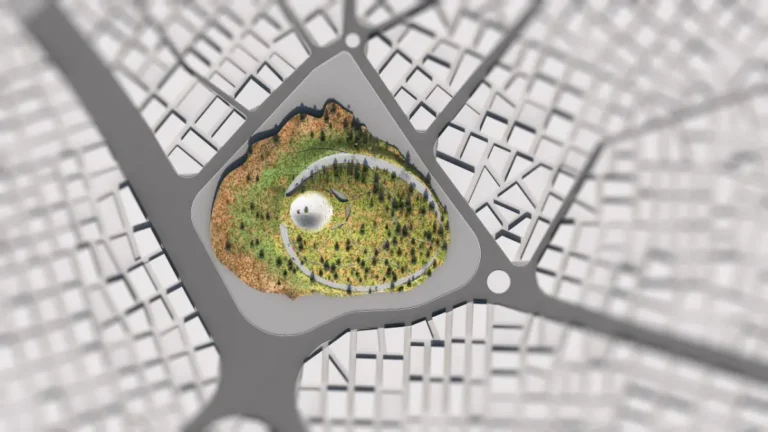
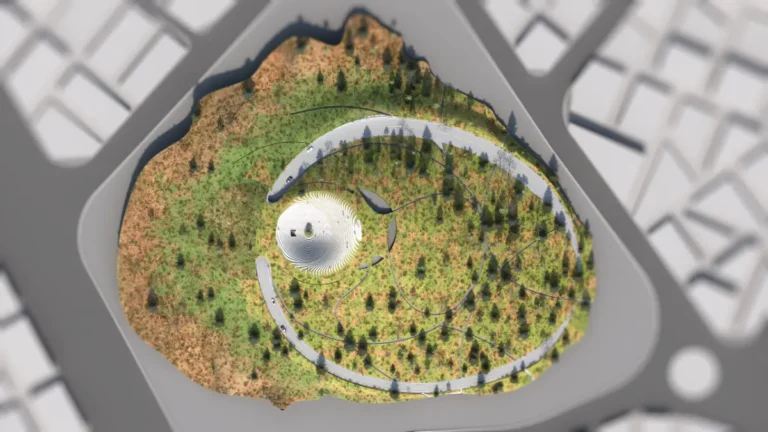
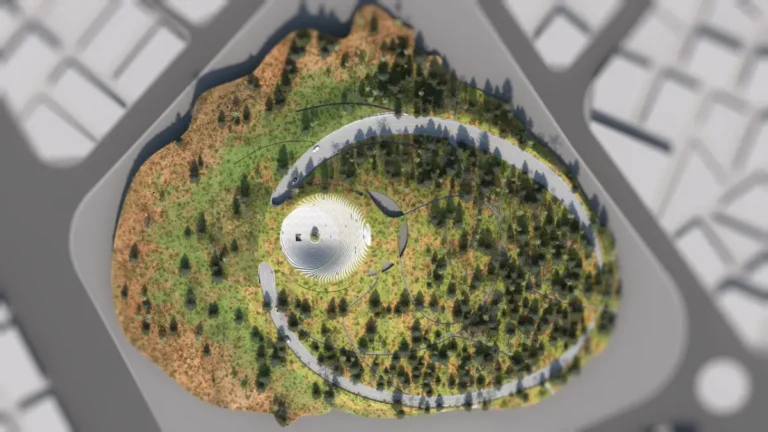
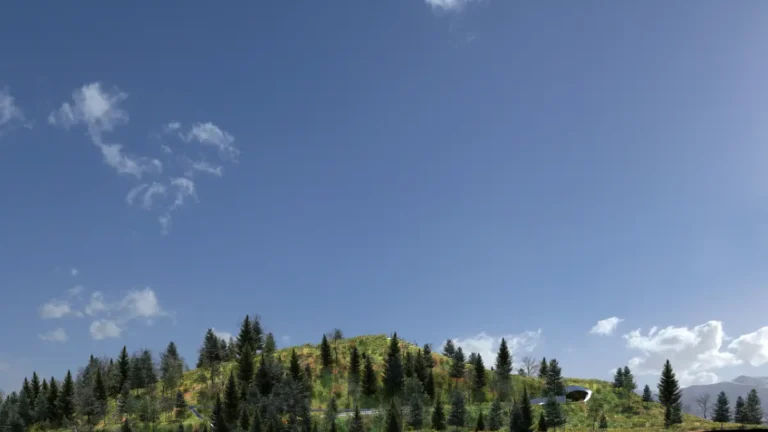
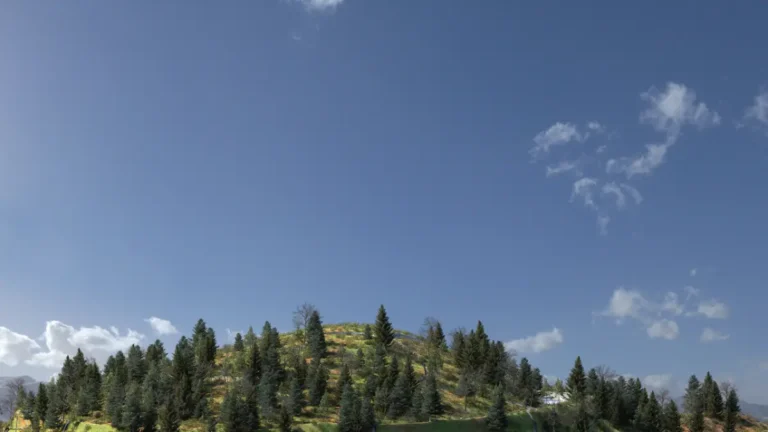
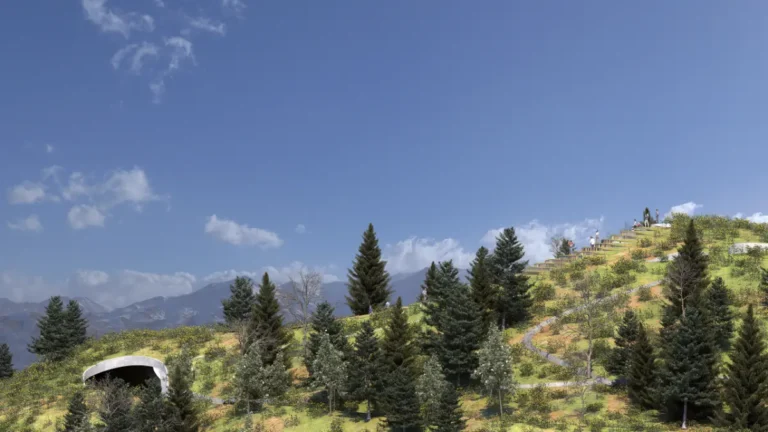
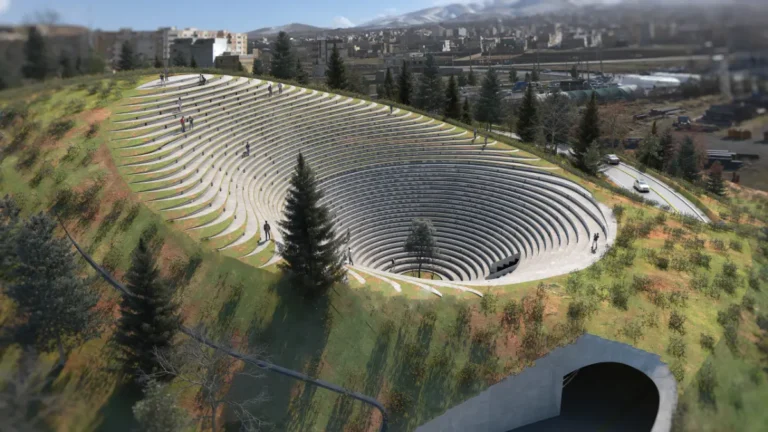
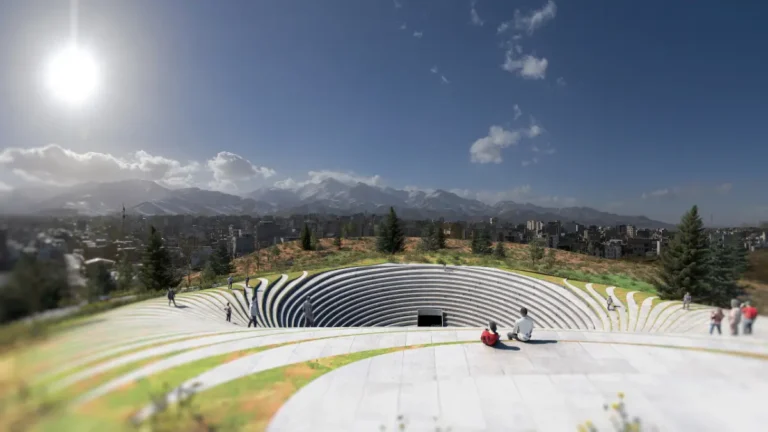
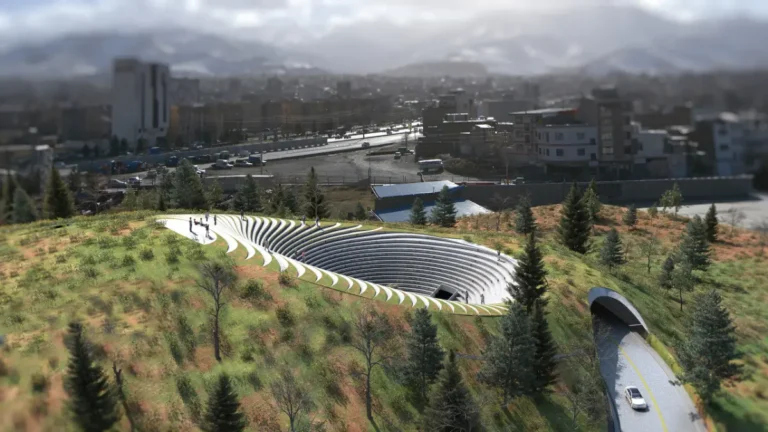
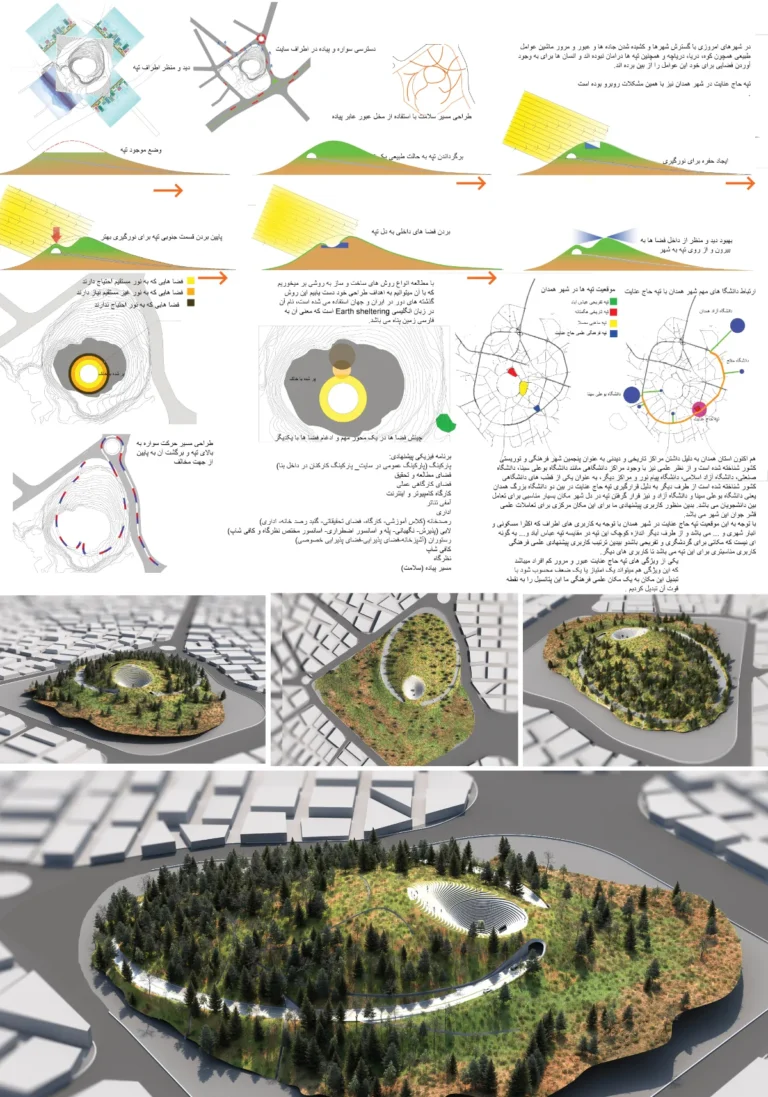
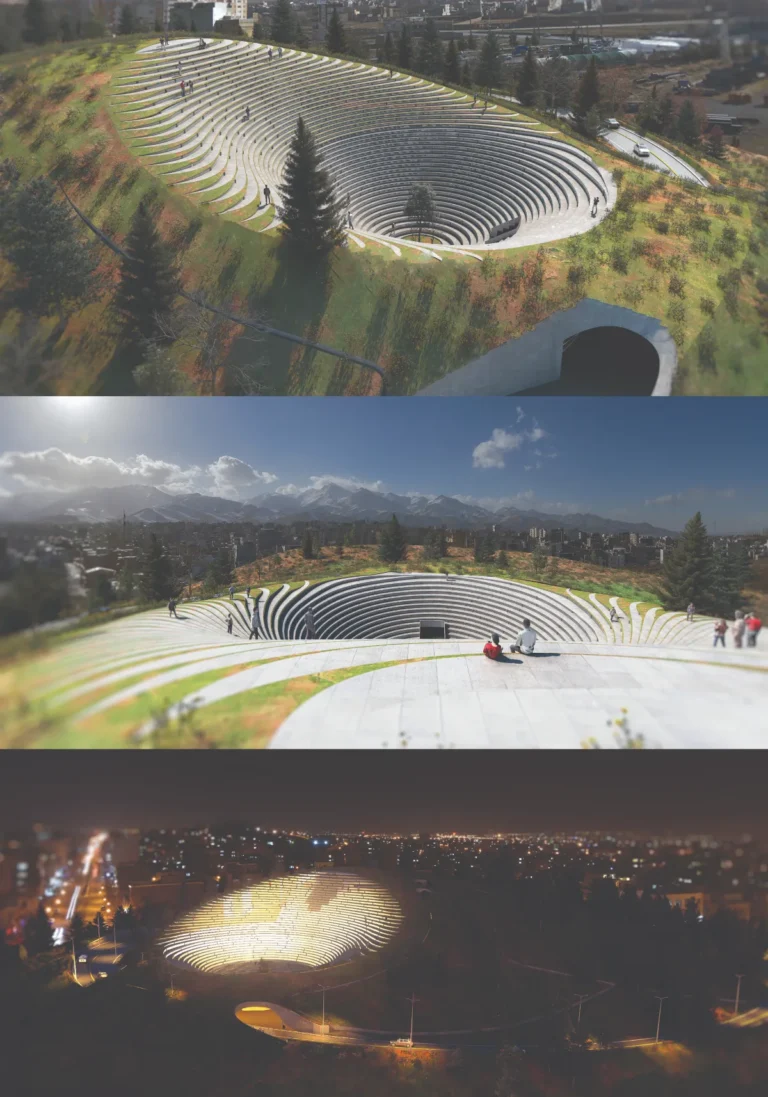
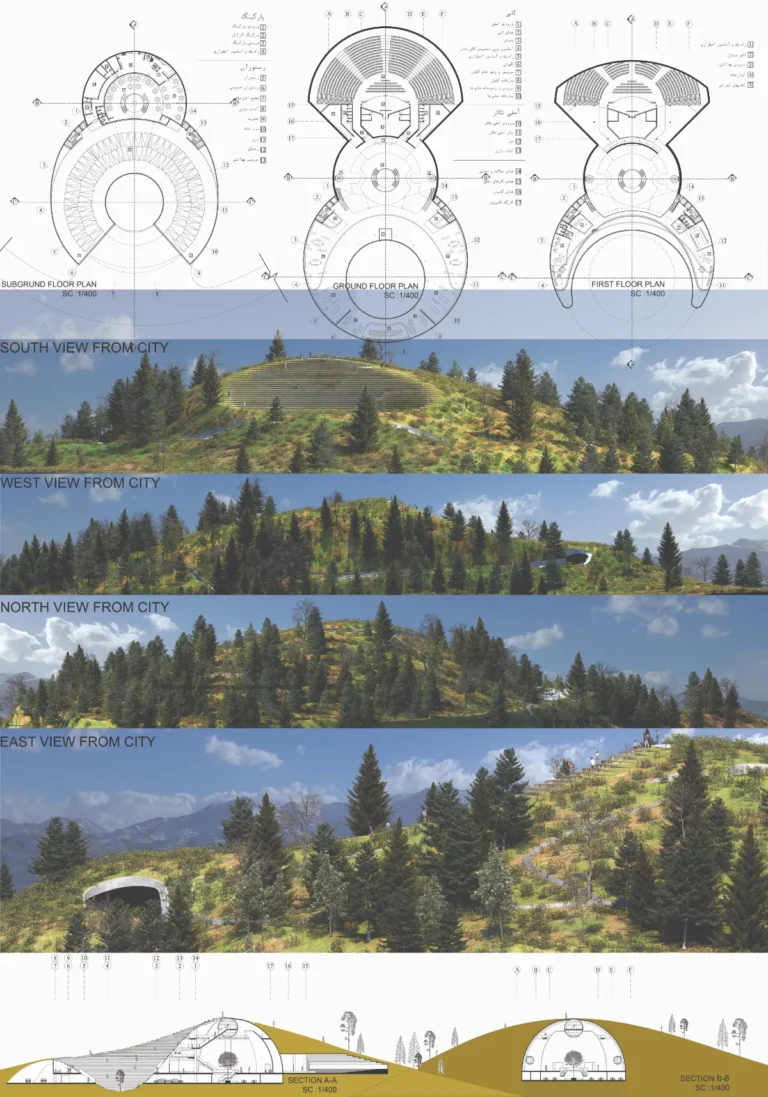
Today, due to construction and land development, these natural landscape views are disappearing. Therefore, the initial idea is to reconstruct the hills and restore them to their original and natural state. Therefore, The design strategy is based on not adding any additional elements to the hill but letting the hill itself be the focal point.
By studying various construction methods, we come across a method that can help us achieve our design goals. This method
has been used in ancient times in Iran and around the world and is known as Earth sheltering. The term Earth sheltering refers to designing a building in a way that it is partially covered by soil. A building can be described as Earth sheltered if its outer surface is in contact with a significant thermal mass of soil or subterranean layers.
In Iran, examples of this method can be seen in Meymand in Kerman and Kandovan. Considering the cold and mountainous climate of Hamedan and the temperature variations throughout the day and seasons, this method can be the best construction approach to utilize the thermal capacity of the soil effectively.