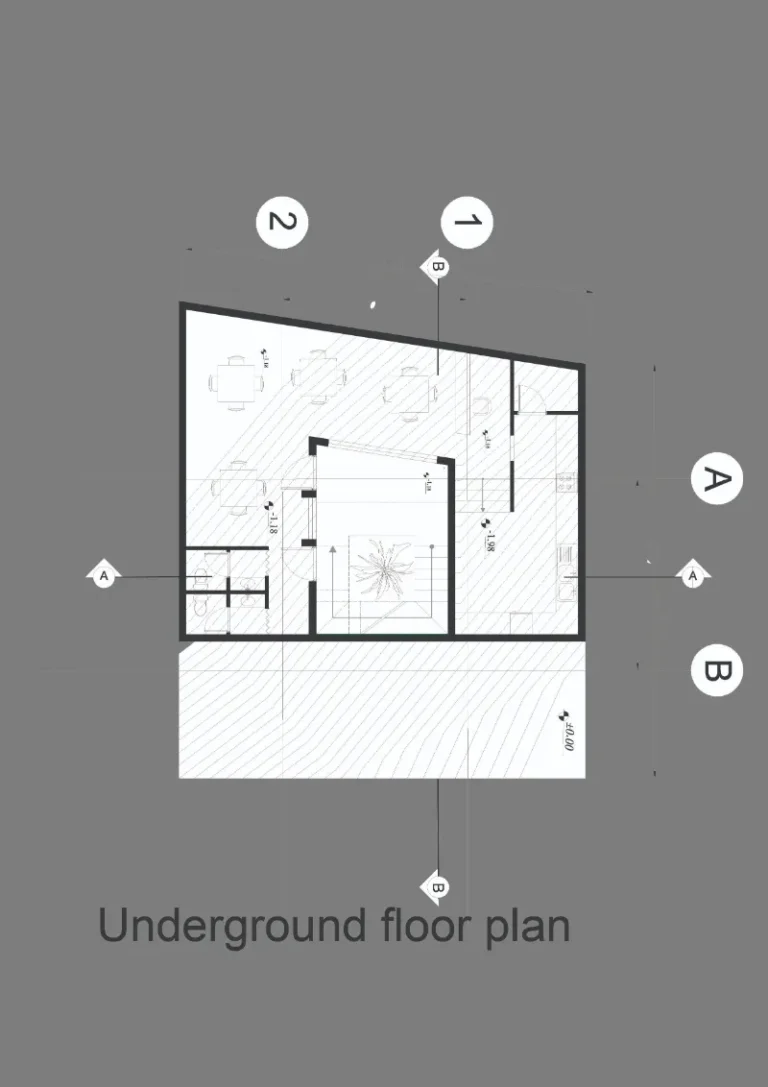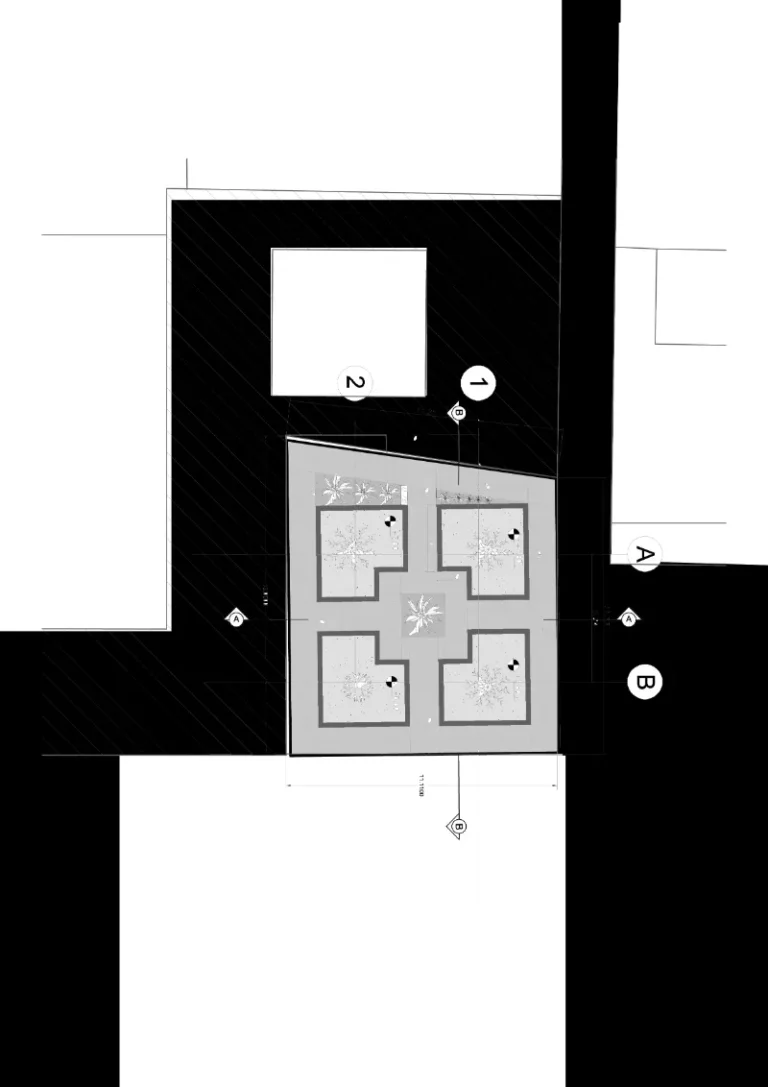
Detailed Site Specifications:
Site Introduction: Municipality of District 3, Takht-e Gonbad neighborhood, Isfahan.
Site Area: 138.55 square meters.
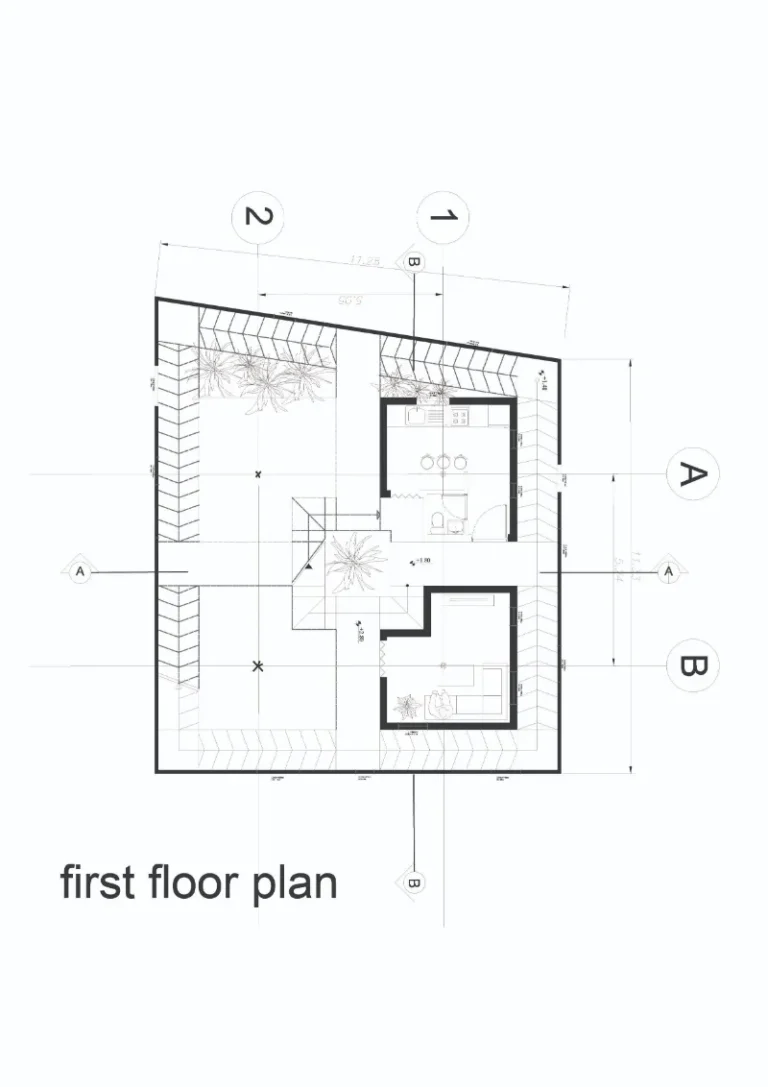
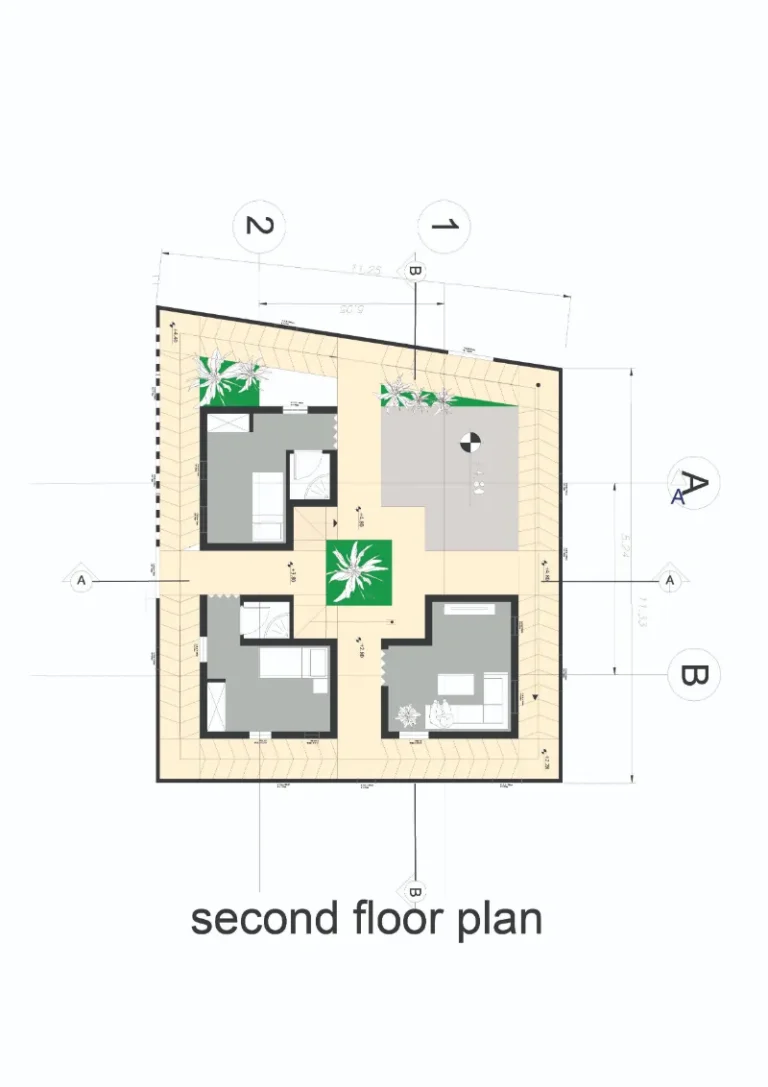
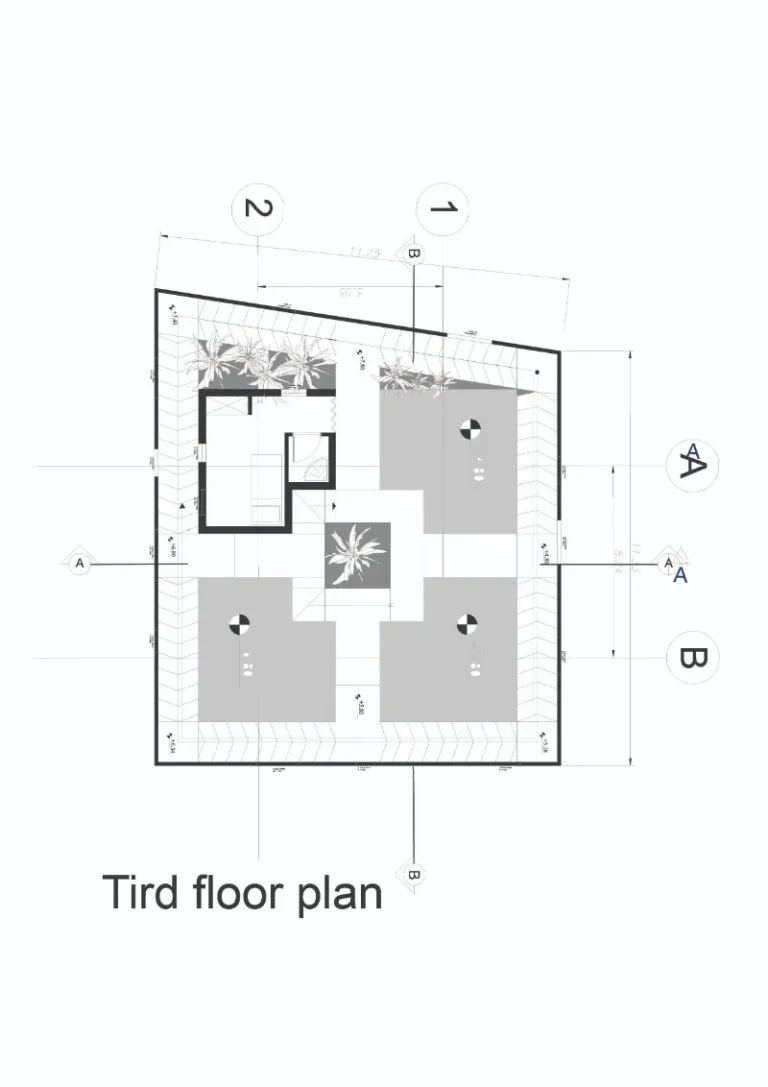
Site Dimensions and Proportions: North- 11.33; South- 13.05; East- 11.11; West- 11.23.
Access Points: An alley with a width of 3.10 meters on the northern side . An alley with a width of 9 meters on the eastern side.
Adjacent Areas: Residential.
Slope: Zero percent (0%).
Dilapidated Structure: Yes.
Unstable Structure: Yes
Historical Structure: Yes.
Metro Buffer Zone: No.
Fault Zone : No.
Building Height: 6 meters up to the roof eaves.
Occupancy Rate: 60% plus 1.20 in the north of the plot.
Covered Parking: Not mandatory.
Elevator: Not mandatory.
Basement: Allowed.
Maximum protrusion of the console
towards the street (meters): Zero
…………………….
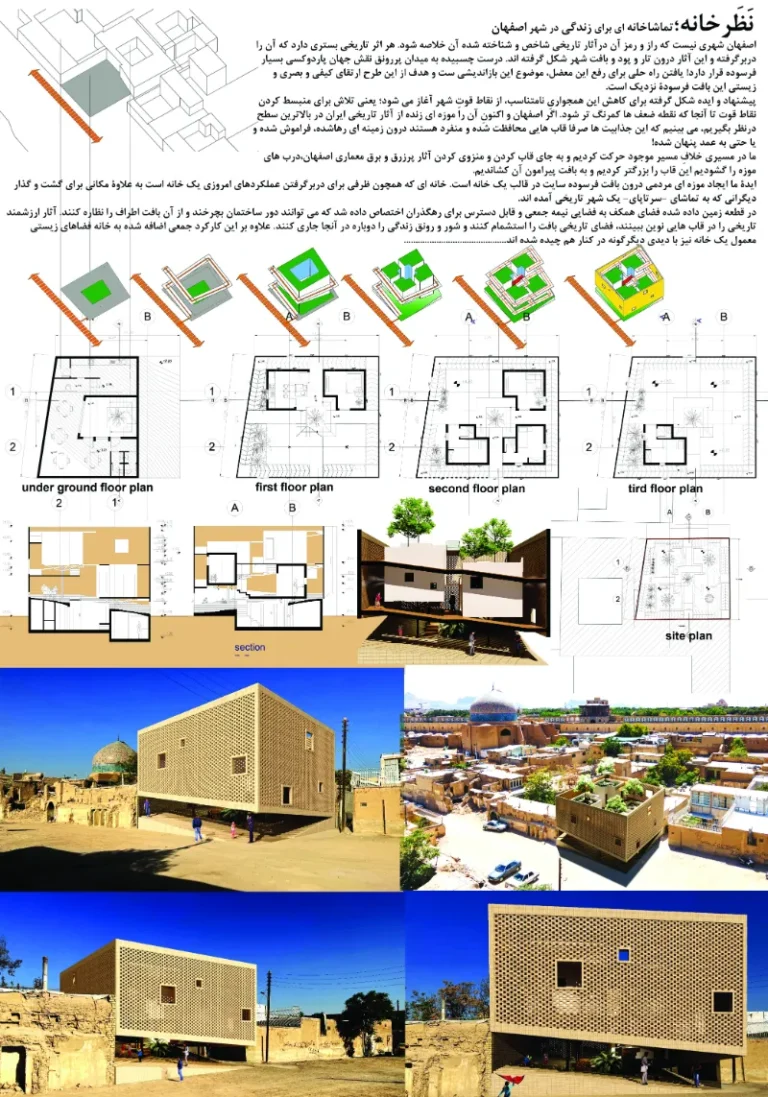
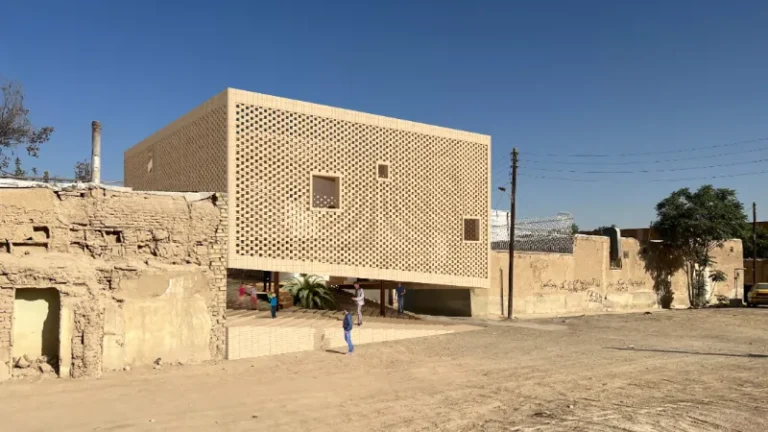
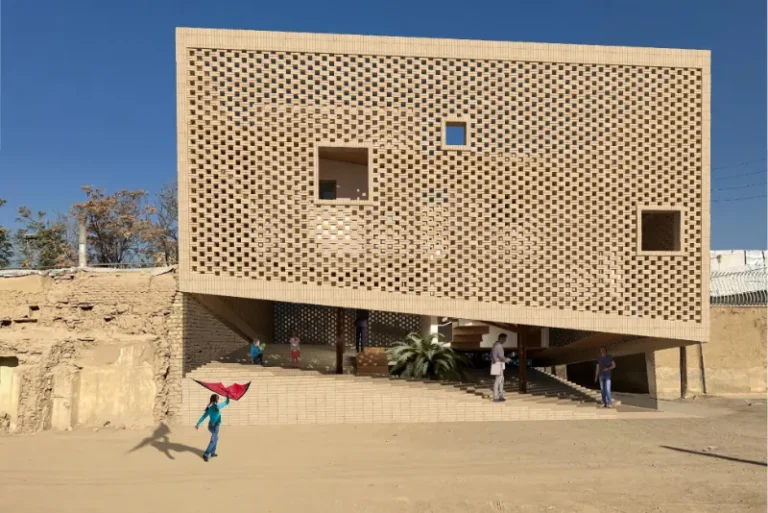
Nazar_Khāneh ; a viewing point for living in Isfahan city
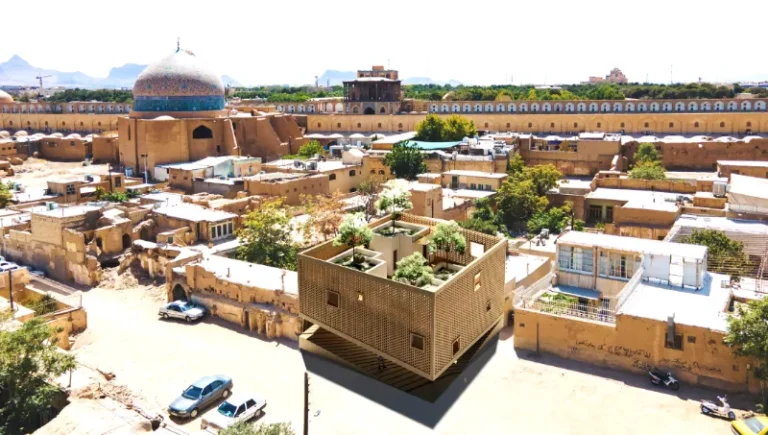
Isfahan is not a city whose secrets lie solely in its prominent and well-known historical monuments. Every historical artifact has a context that encompasses it, and these artifacts have shaped the fabric of the city within its history and structure. Right next to the bustling Naghshe_e_ Jahan square, there exists a neglected and abandoned urban fabric within the walls. Finding a solution to address this issue is the subject of this reconsideration, and the aim of this project is to enhance the quality, visual appeal, and vitality of this aging fabric.
The suggestion and developed idea for reducing this inappropriate juxtaposition
begins with the city’s strengths; that is, trying to expand the strengths to the extent that weaknesses fade into the background. If we consider Isfahan and its current state as a living museum of historical artifacts in Iran at the highest level, we see that these attractions are only showcased through protected and isolated frames. The background and surrounding fabrics are either abandoned or deliberately hidden.
We have moved in a direction contrary to the existing path and instead of framing and isolating the dazzling and magnificent architectural artifacts of Isfahan, we have opened the doors of the museum. We enlarged this frame and drew visitors into the surrounding fabric.
Our idea was to draw people into the aging fabric of the site and showcase new frames and perspectives on the prominent
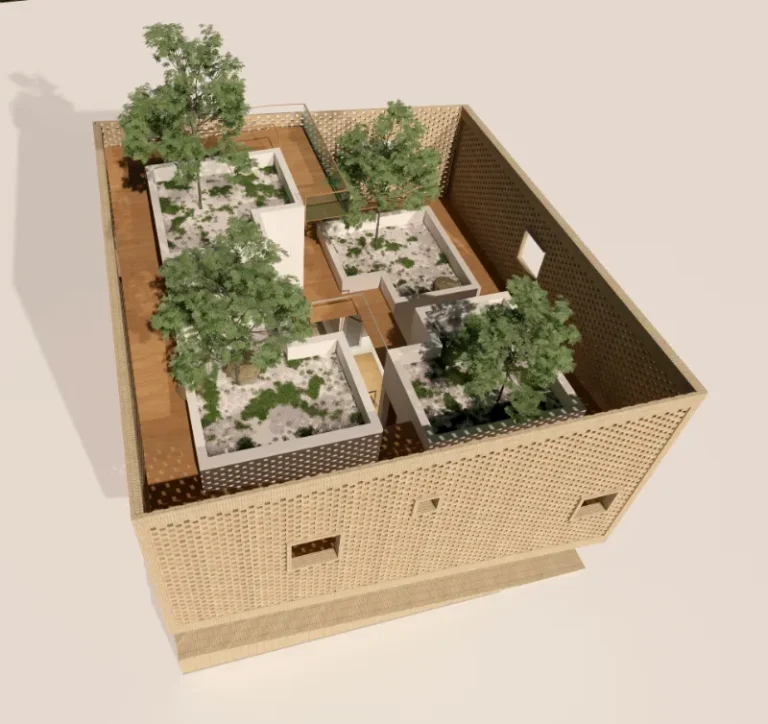
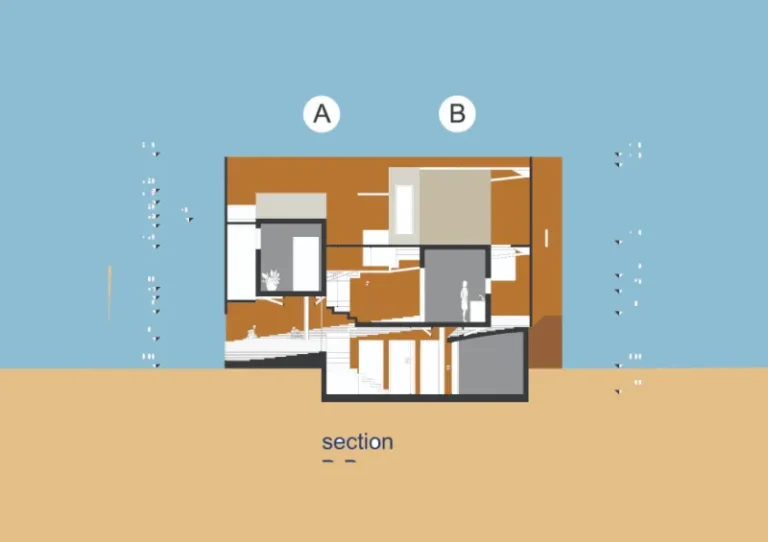
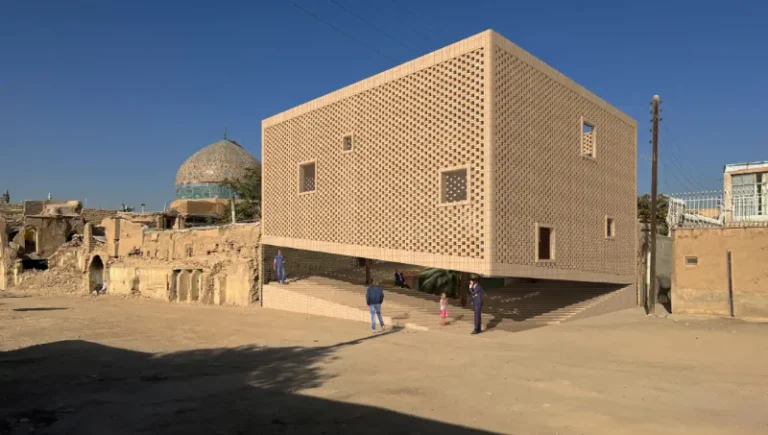
architectural artifacts of Isfahan through a house left within the fabric. A house that acts as a container for embracing the modern functions of a home, in addition to being a place for others who have come for excursion to admire – from head to toe – a historical city.
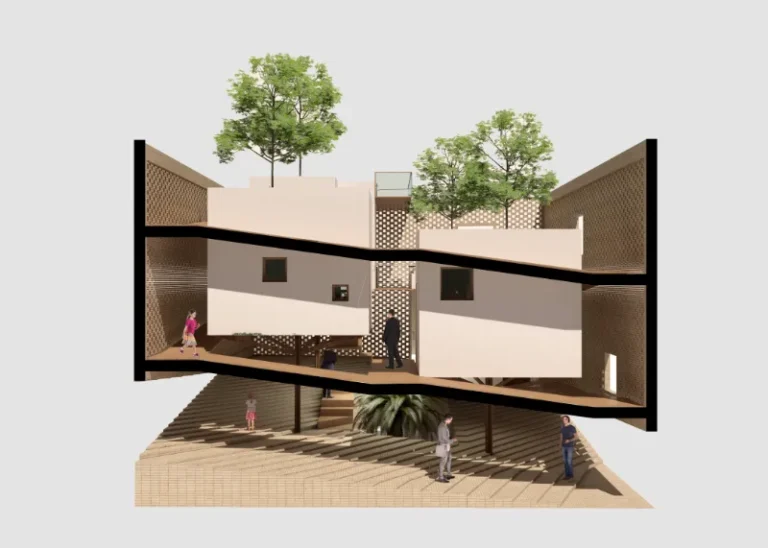
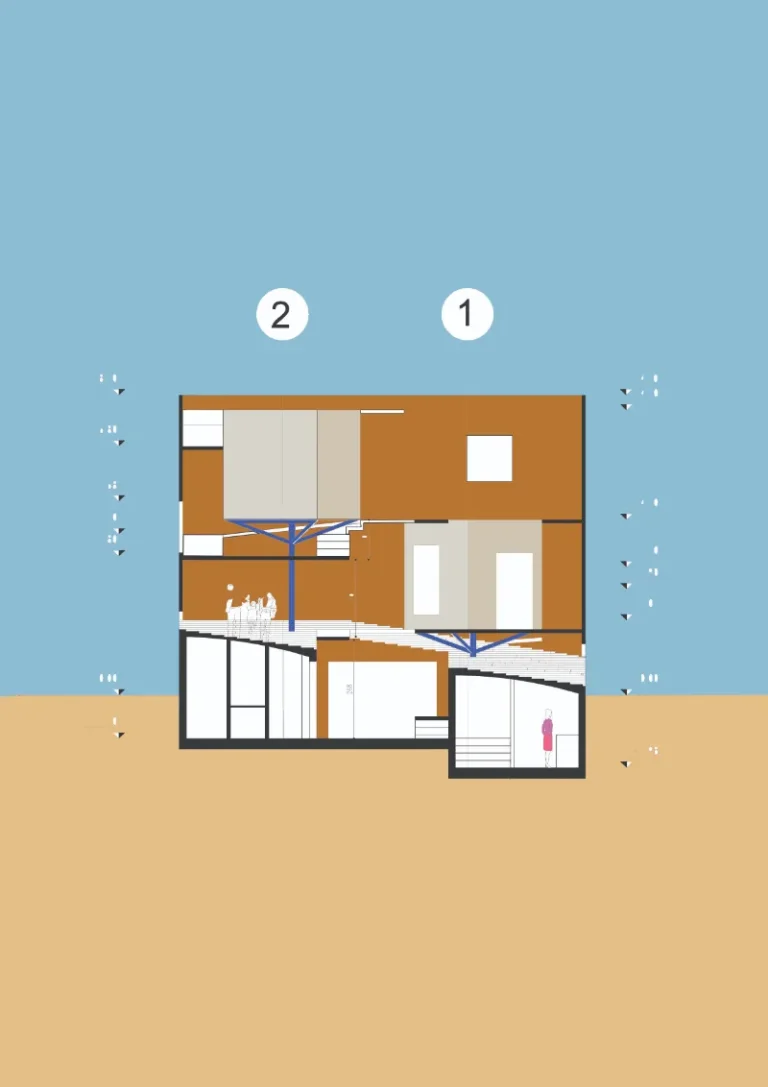
In the given land plot, the ground floor space was allocated to a semi-public and accessible space for passersby, and then by moving along a ramp-like path, they can rotate around the building and observe the surrounding fabric. They can see valuable historical artifacts in innovative frames, smell the historical atmosphere of the fabric, and revive the excitement and vibrancy of life there. In addition to this communal function added to the house, ordinary living spaces are arranged side by side with a different point of view.